


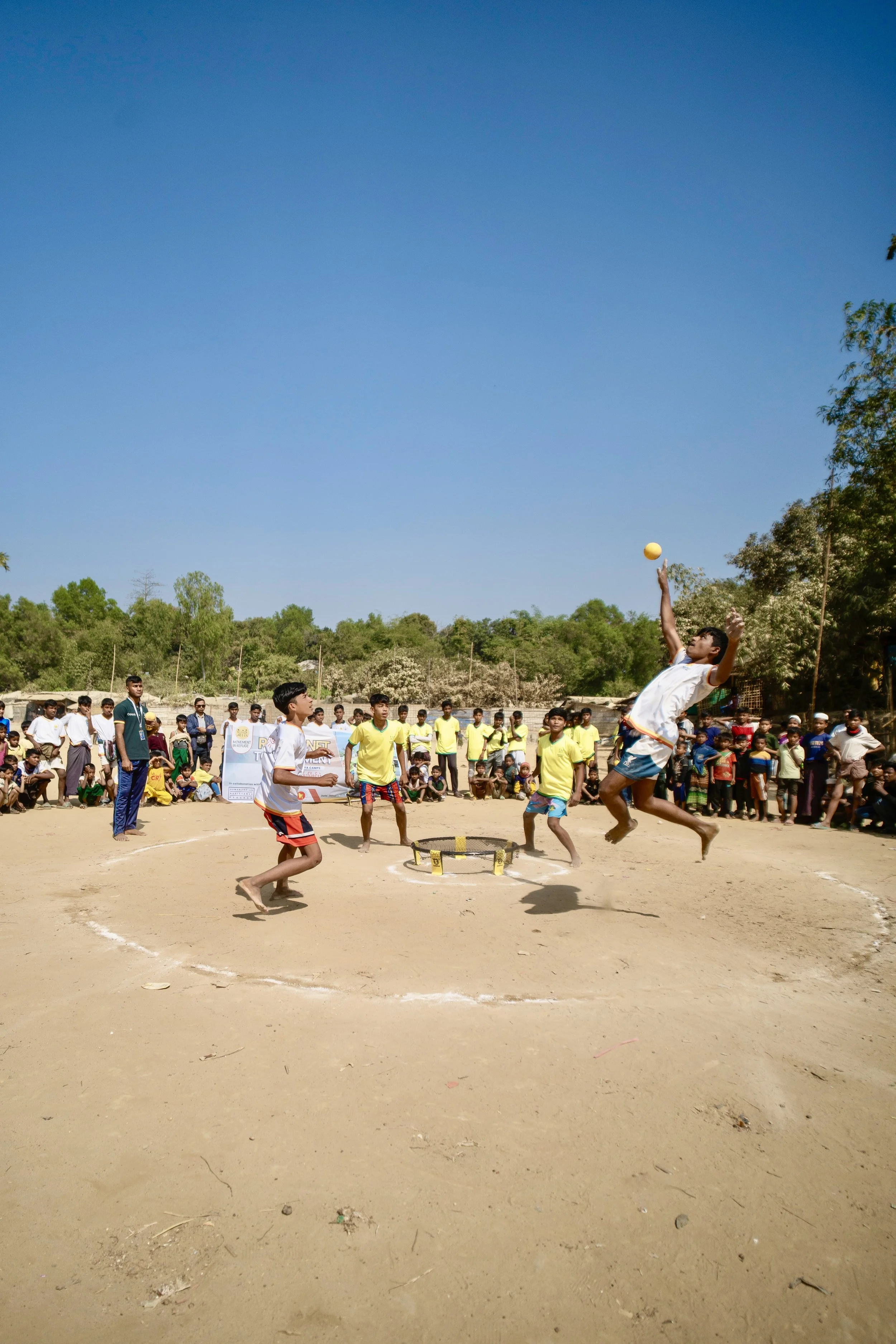

Movement Changes
Everything
In the world’s largest refugee camp, sport and movement are just beginning
Right now, less than 1% of refugees have access to organized sport
We want to reach 5%
Why sport?
Movement in Refuge. The name means something.
There is a moment every athlete knows: the deep breath before the next move; the focus so complete that everything else falls away. When the ball swishes the net, the inner peace in the deep stretch, when the queen makes her winning gambit — that is a moment of refuge from the struggles of life.
But for someone living through conflict, displacement, or trauma, that moment is a lifeline.
There is increasing evidence of what athletes and coaches have long known: physical activity improves trauma recovery. Movement reduces anxiety, depression, and the paralysing weight of chronic stress. Sport builds trust, confidence, positivity and wellness in a world where much is out of control.
Why should the people most devastated by trauma be the ones most denied this tool of recovery?
A young woman in a Rohingya camp who has never had a day of physical education in her life. A boy in Khartoum who was training for his black belt. A teenage girl in Gaza who was learning to surf. Where people living with disabilities cannot participate in any game. Where Under-18s have no safe space to play.
This is the area Movement in Refuge exists to address.
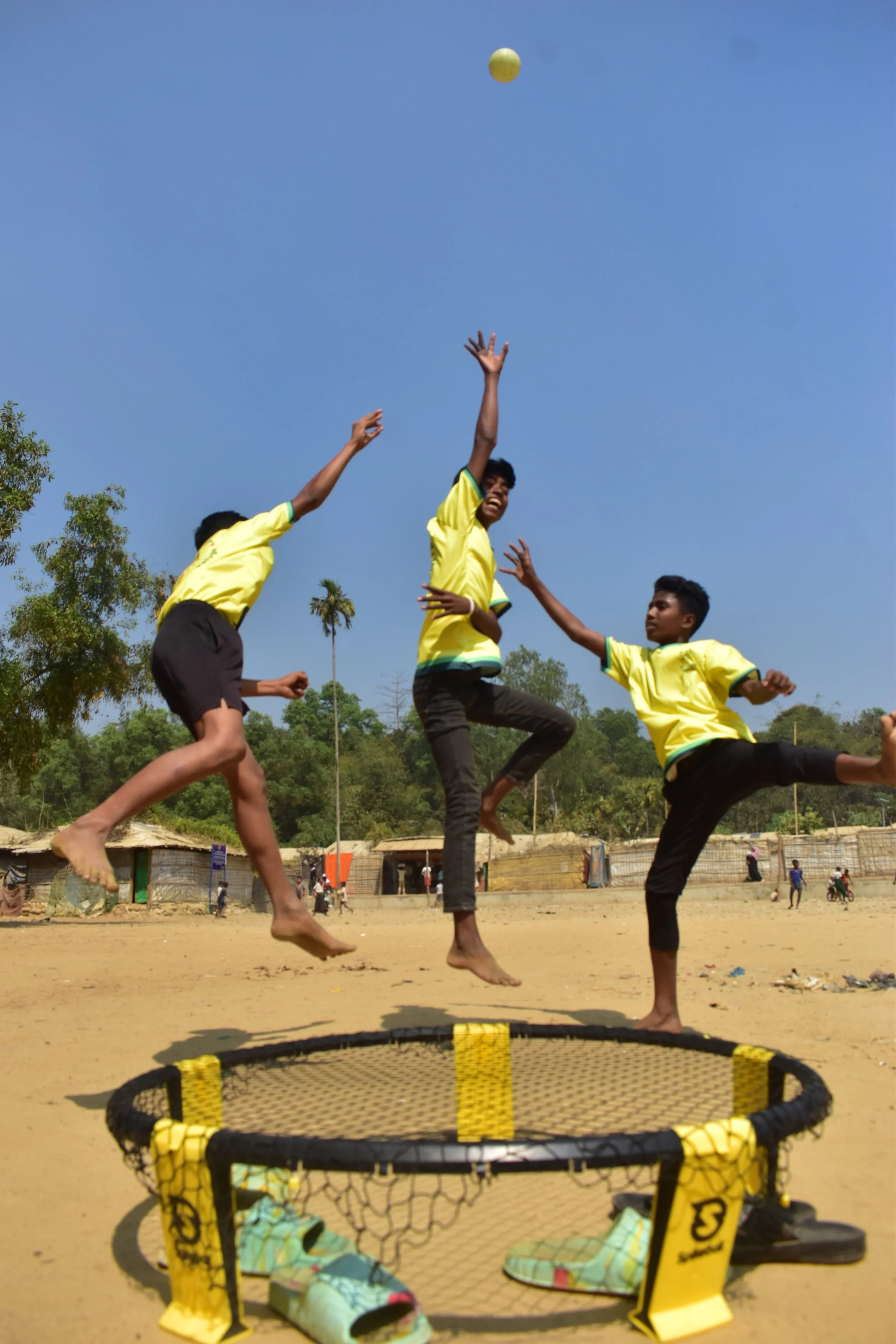
Who we are
We are a sport-for-development organisation working in the Rohingya refugee camps of Cox's Bazar. We train community coaches — drawn from refugee and host communities themselves — to deliver structured sport, movement, chess, yoga, and literacy to children and young people.
Sport is the mechanism through which we do everything else. A girl who trains, competes, and wins carries something displacement cannot reach. A boy with a coach and a team is a boy not being recruited into something worse.
Movement is prevention. Community is the unit of change.
Strength
A body that has trained knows what it can do. That knowledge belongs to her.
Safety
Structured sport creates the community conditions that protect people, before harm occurs.
Confidence
From the first session to the first tournament. Every rep, every match, every win builds it.
Belonging
A team, a coach, a reason to show up on Tuesday. That is what displacement takes. We give it back.

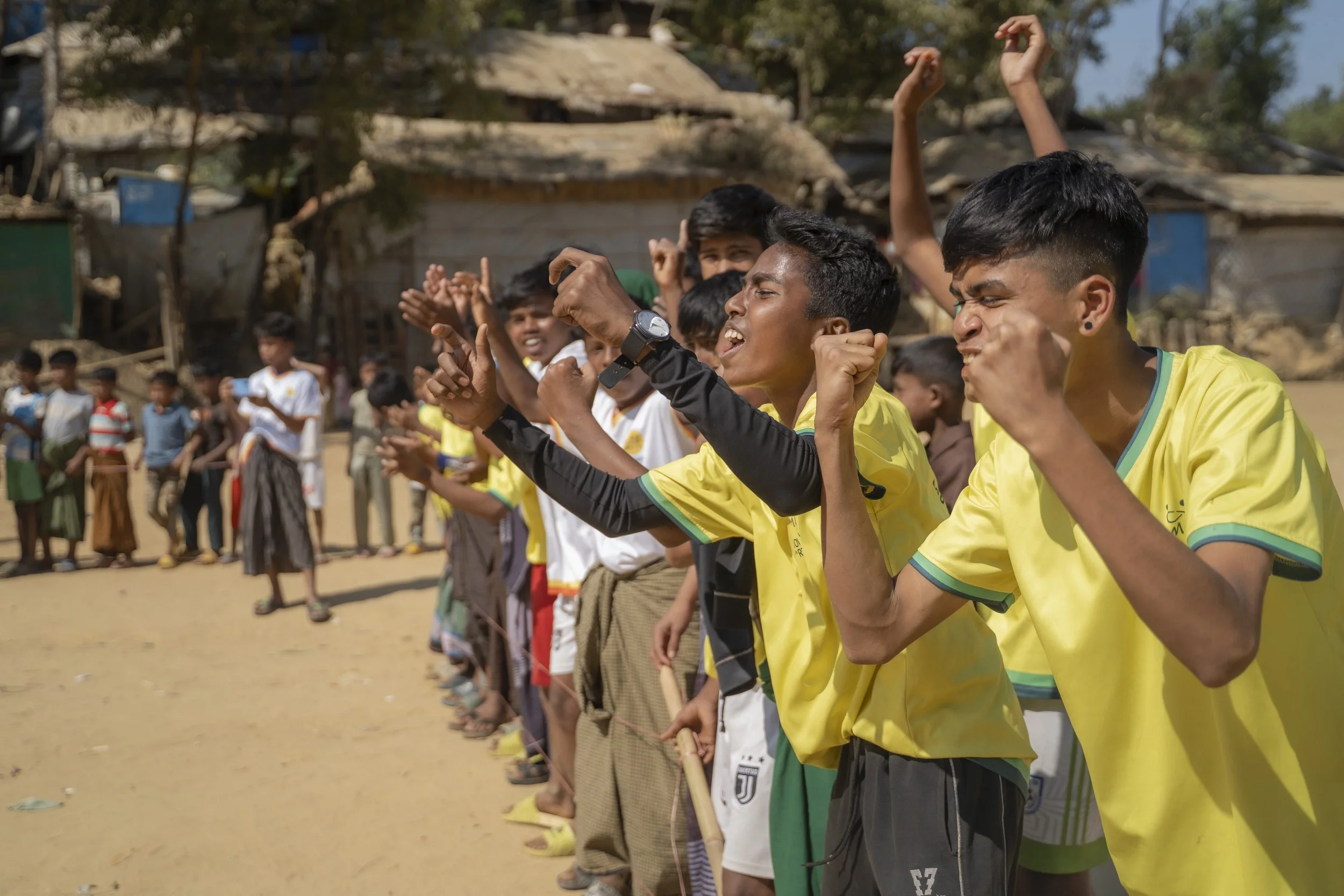
Current Challenge
People forcibly displaced globally
122 million
hosted in low- and middle-income countries.
71%
no access to organised sport, coaching, or physical education
99%
under 18 Rohingya children in Cox’s Bazar
340,000
Many more people around the world are living through excruciating conflict. Though most haven’t actually left their own country, their stability has been wrecked and communities are shattered. With schools often closed, sports almost always disappears. We believe this is when they need to play even more, in structured and organised ways.
We are not trying to reach them all, but we want them to have the access. And we believe the sports world should know this need.
Our goal: 5% of refugee youth with access to quality sport coaching.
Think about that for a moment. Where else in the world would it be acceptable for 95% of young people to have no physical education whatsoever? Where young mothers can’t attend a yoga class? Where older people have no access to movement or meditation? Where people living with disabilities cannot join any team? Where an entire generation grows up without a game to play, a coach, or a team?
What we do

-
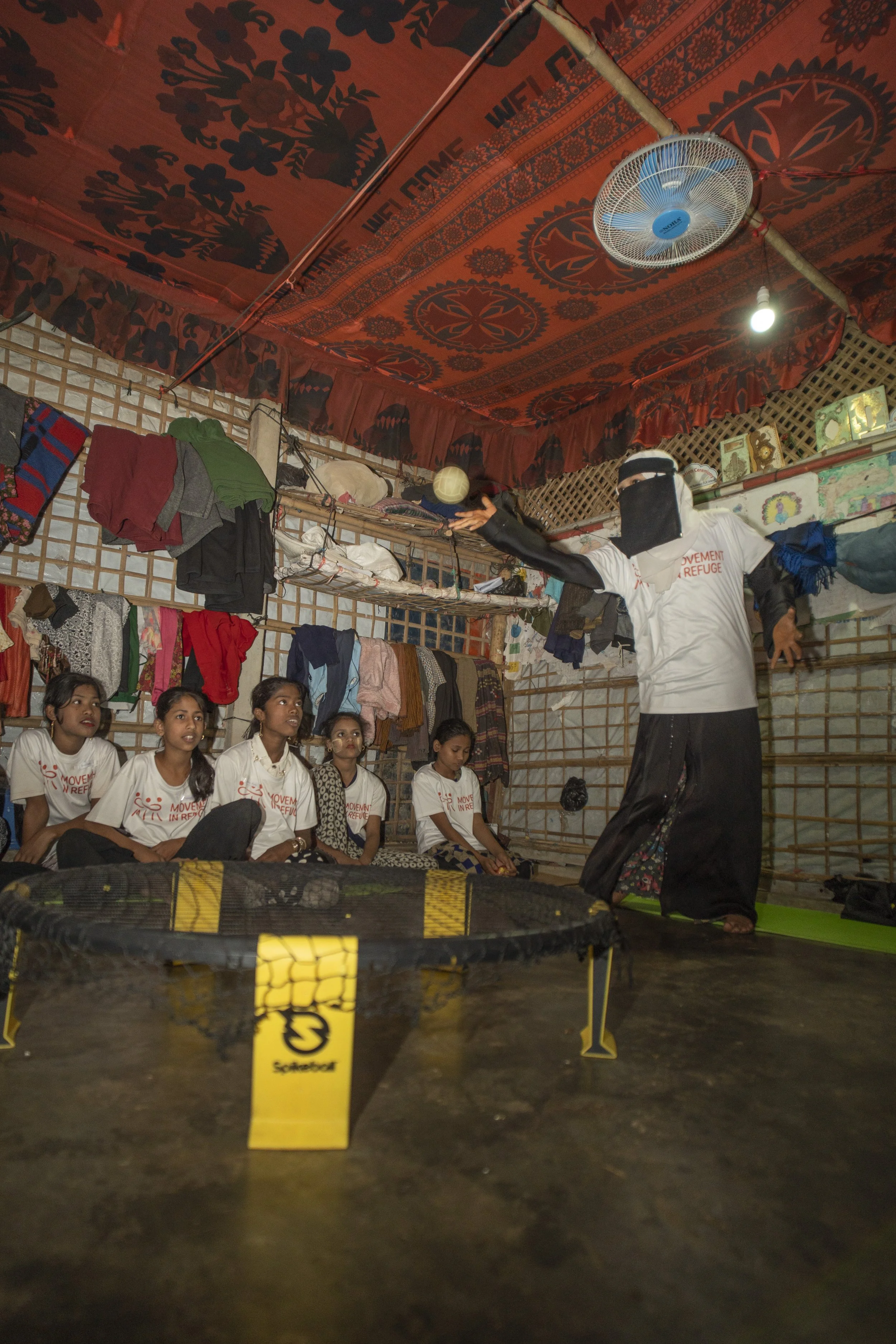
Football, roundnet, volleyball, yoga and fitness for 128 students — equal boys and girls — training four days a week.
✓ Active
-
40 boys currently enrolled. Women & Girls Centre in planning — targeting 300 participants in a community-donated 70m² bamboo-thatch space.
↑ Expanding
-
FIDE visits Cox’s Bazar in June to launch a major chess coaching project. Online matches with refugee players in Kenya just the beginning.
▶ Launching June 2026
-
First-ever refugee roundnet tournament, January 2026 — 88 teams, boys and girls. Five national federations supporting. Target: recognition and support at the World Championships, September 2026.
✓ Active
-
Fishing village of 6,000 where drowning kills around 7 children annually. 3-year swim coaching programme targeting 1,000–1,600 young people. 50% girls.
▶ Funding sought
-
Rohingya students exchange letters and art with schools worldwide. Active with Edinburgh, Scotland. Scottish students have asked to learn Sallun, the caneball played across SE Asia. We love it.
✓ Active — growing
How we work
MiR delivers sport and movement as a holistic system — safeguarded developmental programming that strengthens safety, wellbeing, confidence, and social connection for displaced youth. Not recreation. A system.
Gender Based Violence (GBV)
Safeguarding, child protection, prevention of sexual exploitation and abuse (PSEA), and GBV prevention underpin every programme pillar — embedded in coach training, session design and monitoring from day one.
Physical Sport & Water Safety
Building strength, safety, and competitive pathways
Basic physical literacy (aerobic capacity, balance, strength)
Team sports (football, roundnet, volleyball
Swimming & water safety — drowning prevention
Self-defence & martial arts
Structured competitions & tournaments
Cognitive Sport
Strategic thinking, patience, and focus
Chess for Protection (anchor initiative)
Federation-aligned progression
Online cross-border competitions
Pathways to national & international play
Literacy and language training
Mind-Body Practice
Nervous system regulation & emotional wellbeing
Yoga (currently delivering across 2 camps)
Meditation & breathwork
Future: Qigong, Tai Chi
Trauma-informed movement
Inclusive of older adults, not just youth
Learning Through Movement
Embedding basic literacy and numeracy into every session — movement-based learning that meets children where they are.
“It was like someone turned on the sun.”
Before MiR started we had nothing to do — stuck at home, often sad and depressed. Then we started training with MiR. I am feeling so much more energy and power. I wish we could include more women and girls so I could show them, help them learn and play too.
Ajida, age 14 · MiR athlete, Cox’s Bazar · January 2026
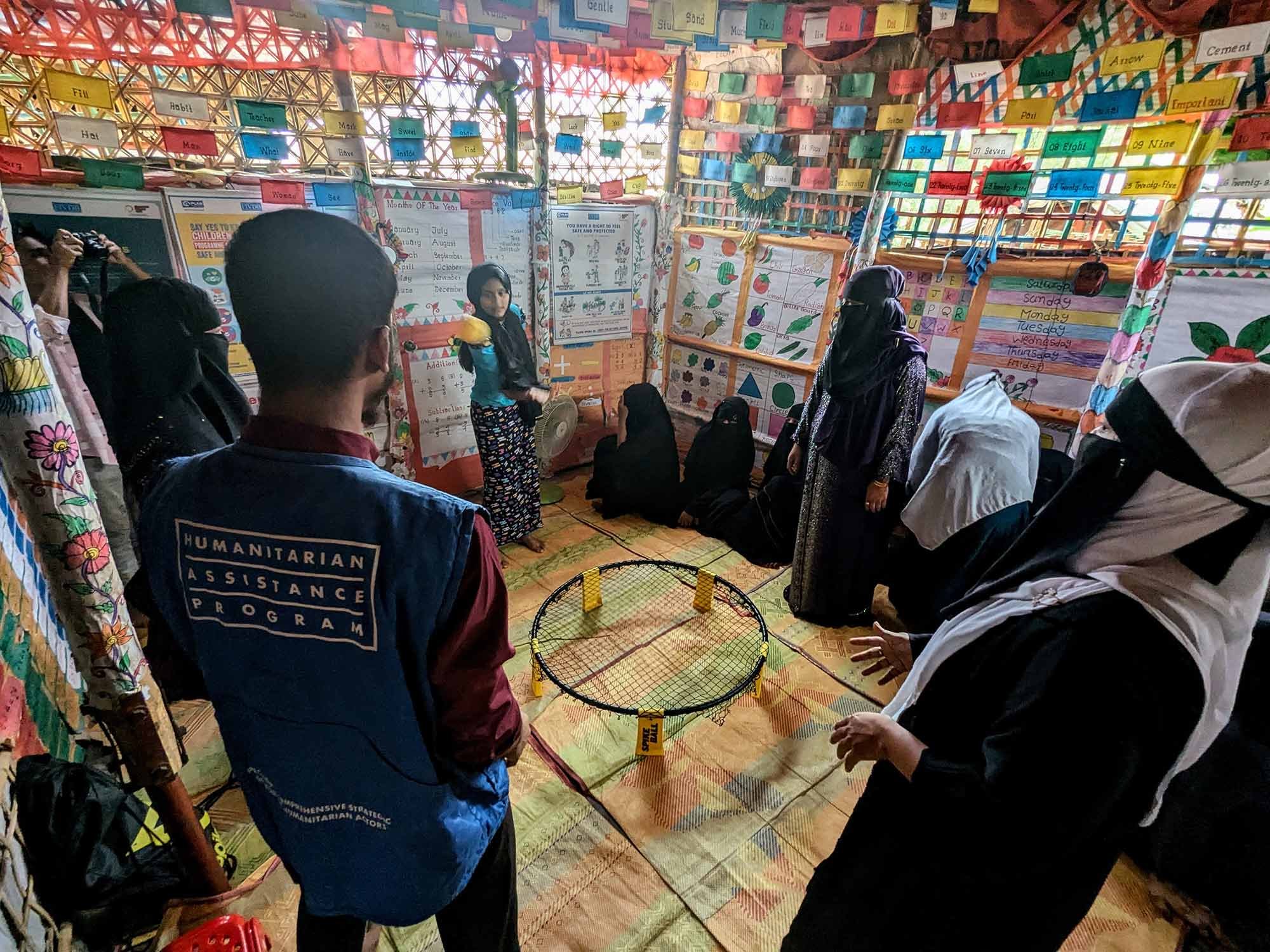
“The community offered us a 70m² bamboo-thatch space, free of charge, for 300 women and girls to train in.”
The Rohingya community built it. They offered it. They asked us to fill it with sport, yoga, self-defence, chess, and literacy. That is what Movement in Refuge means in practice — not programmes delivered to communities, but programmes built with them.
Magnus Wolfe Murray · MiR Founder · Cox’s Bazar · April 2026